
Choosing the right boot after breaking a pinky toe can make a big difference in comfort and healing. Boots designed for foot injuries often offer extra support and protect the injured toe from further harm. Many of these boots have a roomy toe box and firm soles to reduce pressure on the toe while walking.
Not all boots are built the same for healing broken toes. Some provide rigid structure to limit movement, while others offer cushioning to absorb shock. The material, fit, and sole stiffness are critical because they affect pain relief and how well the boot shields the toe. A boot that is too tight or too loose can cause discomfort or slow down recovery.
Buying the best boot means balancing protection, comfort, and ease of use. People should look for boots that keep the pinky toe stable without creating extra pressure. We researched many boots and tested several to find the ones that best support a broken pinky toe while allowing for daily activities.
Top 3 Boots: Comparison
The Dr. Comfort Walker Boot offers firm support and a roomy toe box. It helps keep the broken pinky toe stable while reducing pressure. The adjustable straps allow for a custom fit, which is helpful for swelling.
The Procare Walker Boot is lightweight and has a cushioned sole. It provides good shock absorption, making walking less painful. Its design is simple but effective for protecting the toe during healing.
The Aircast AirSelect Walker Boot stands out with air cells around the foot. These cells give extra cushioning and support. This boot is a bit bulkier but offers excellent protection and comfort.
| Feature | Dr. Comfort Walker Boot | Procare Walker Boot | Aircast AirSelect Walker Boot |
|---|---|---|---|
| Toe Box Space | Wide and roomy | Standard | Wide |
| Adjustable Straps | Yes | Yes | Yes |
| Weight | Moderate | Lightweight | Heavy |
| Cushioning | Moderate | Good | Excellent |
| Protection Level | High | Moderate | High |
Each boot has different strengths. The best choice depends on what balance of comfort, support, and weight the user prefers.
Best Boots for Broken Pinky Toe
Choosing the right boot for a broken pinky toe is important for comfort and healing. The boots listed below provide good support, protection, and extra space to reduce pressure on the injured toe. They help make walking easier while the toe heals.
ZenToes Buddy Toe Wraps

This product works well for stabilizing broken toes comfortably, but it may not fit the pinky toe perfectly.
Pros
- Soft, padded material makes it comfortable to wear
- Easy to apply and adjust without sticky residue
- Durable and reusable after washing
Cons
- Not designed specifically for pinky toes
- May feel bulky on smaller toes
- Fit can be loose or tight depending on toe size
The ZenToes Buddy Toe Wraps helped keep the broken toe stable and protected during healing. They wrap around the injured toe and use the nearby toe for support. The soft fabric padding prevents irritation inside shoes.
It is simple to slip the loop over the toe, wrap the band, and secure it with a hook-and-loop fastener. This makes applying it less frustrating than tape. Washing and reusing the wrap is a plus, reducing waste and cost.
Although it fits most toes well, the product is not designed specifically for the pinky toe. People with smaller or very narrow pinky toes might find the wrap either too loose or thick. Still, it provides decent support and comfort for recovery.
The ZenToes Buddy Toe Wraps offer a practical solution for broken toe care, especially if tape irritates skin or falls off easily.
BraceAbility Medical Walking Shoe
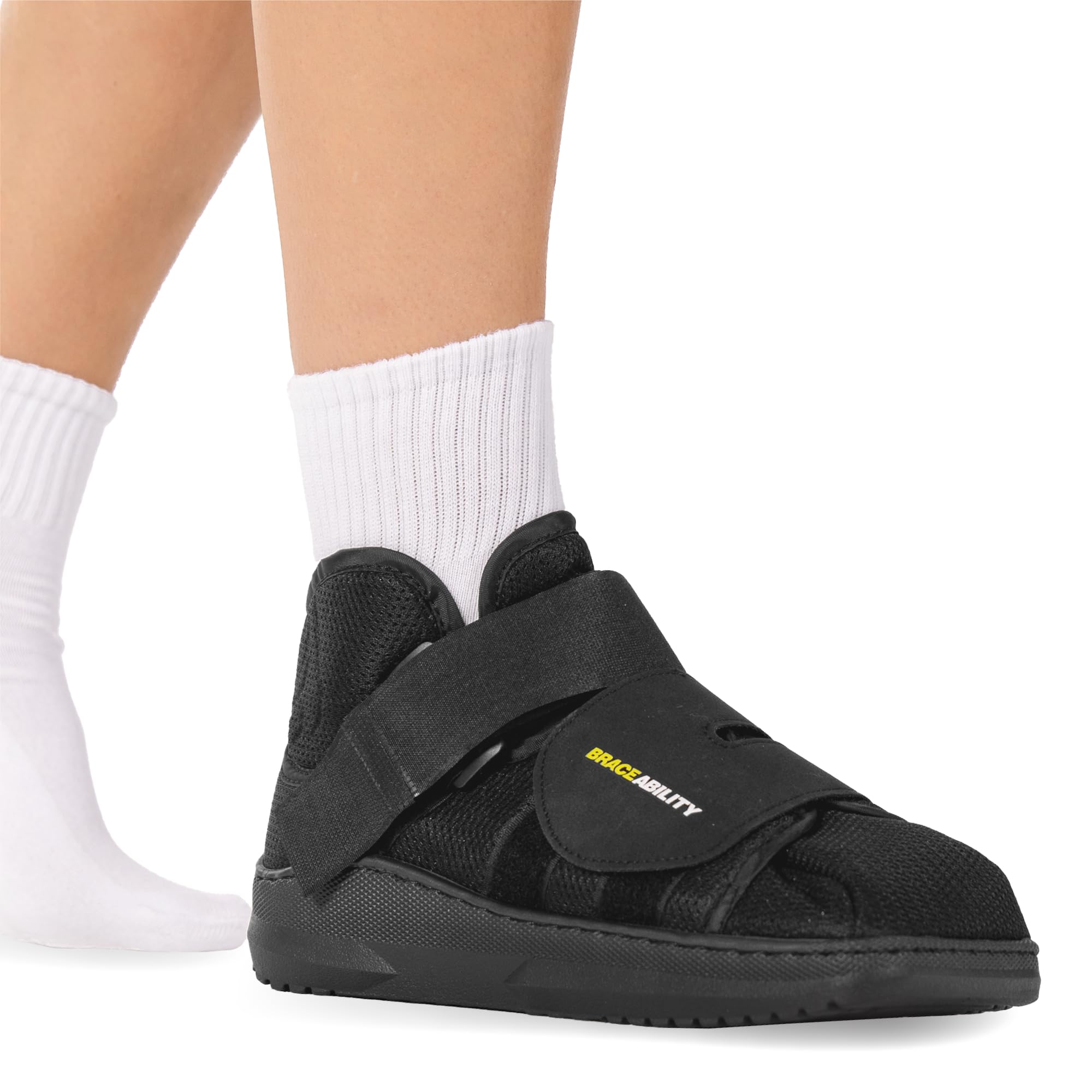
This boot offers solid protection and comfort for anyone recovering from a broken pinky toe, making it a reliable choice for healing.
Pros
- Roomy toe box allows swelling and bandages without pain
- Lightweight yet sturdy design makes walking easier
- Adjustable straps provide a secure, custom fit
Cons
- Padding could be thicker for extra comfort
- Sizing may be tricky, requiring careful measuring
- Closed-toe style can feel tight if foot swells unpredictably
The boot protected the pinky toe well during walking and everyday wear. It felt stable on different surfaces, which helped reduce pain while moving. The adjustable straps made it simple to get a tight fit that stayed in place.
The toe area was large enough to keep from squeezing the injury. This was important to avoid added discomfort. Despite its solid build, the shoe felt quite light and didn’t slow down steps.
Though the padding was okay, some users might want extra cushion for very tender feet. Also, checking the size chart carefully is needed since the fit runs true but can feel snug with swelling. Overall, it kept the foot safe and helped healing stay on track.
Welnove Toe Wraps for Broken Pinky Toe

These toe wraps offer good support and cushioning for a broken pinky toe but may not fit perfectly on smaller toes.
Pros
- Provides soft cushioning and gentle support
- Easy to adjust with Velcro straps
- Slim enough to wear with most shoes
Cons
- Not a great fit for very small toes like pinky or big toe
- Wraps can stretch out after about a week
- Designed mostly for mild toe issues, not severe breaks
The wraps give a soft and stable feel when wrapped around the toe. They helped hold a broken pinky toe in place without causing extra pain. Wearing them inside shoes felt natural because the fabric is thin and soft.
However, the size can be tricky. These wraps fit best on middle toes, so the smallest pinky toe may slip or feel loose. Replacing them every week was necessary since the material loses tightness over time.
Overall, the comfort and easy adjustment make these toe wraps a solid choice to ease discomfort from a broken toe. Just be ready to replace them regularly and check sizing before buying.
BraceAbility Medical Walking Shoe
This boot offers solid protection and comfort for healing a broken pinky toe with a roomy fit and good support.
Pros
- Plenty of space for swollen toes or bandages
- Lightweight but sturdy construction
- Adjustable straps offer a secure, custom feel
Cons
- Sizing can be tricky, may need to size down
- Padding might be too thin for sensitive feet
- Velcro straps could wear out over time
The large toe box gave enough room to avoid pressure on the broken pinky toe, which helped reduce pain while walking. The closed-toe design kept the injury clean and dry, allowing better hygiene during recovery.
The boot felt surprisingly light, so wearing it for long periods didn’t feel tiring. It also stayed stable on different surfaces thanks to the non-slip sole, which boosted confidence when moving around indoors or outdoors.
A downside was the sizing; it’s important to check the chart carefully because some found it a bit loose or large. The padding suited average comfort needs but might fall short for people who need extra cushioning around painful spots. Overall, it is an effective choice for broken pinky toe recovery.
LINXIU Toe Splint for Broken Toe

This toe splint works best for people with second toe issues but may not fit well on smaller toes like the pinky.
Pros
- Breathable and sturdy fabric feels comfortable on skin
- Aluminum support gives good toe alignment
- Simple to adjust and use daily
Cons
- Velcro strap can be too short and may slip off
- Not designed for smaller toes like the pinky
- Requires extra tape for secure fit in some cases
The splint uses strong, anti-friction fabric that helps reduce pain and is nice to wear for long periods. It held the toe straight well and fit inside shoes without much bulk. The aluminum plates are slim but firm enough to give good support.
Users found the Velcro strap tricky; it sometimes slips off, which is frustrating. The product is clearly made for the second toe, so it might not grip a broken pinky toe well. Extra medical tape might be needed to keep it in place.
Overall, this splint is solid for toe problems like hammer toe or sprains, but it is not ideal if you want help for a broken pinky toe with no slipping. It works best if your toe size matches the design.
ProCare Post-Op Shoe

This shoe offers solid support and protection for a broken pinky toe while keeping the foot stable and dry.
Pros
- Roomy square toe gives extra space for injured toes
- Rigid sole helps reduce pressure when walking
- Adjustable straps keep foot securely in place
Cons
- Can feel a bit bulky at first
- May get warm wearing it for long periods
- Universal fit might be loose for smaller feet
The square toe design really makes a difference in comfort. It avoids squeezing the broken pinky toe and gently acts like a bumper during movement. This prevents added pain while still allowing some flexibility.
Walking felt easier with the stiff rocker sole. It lessens pressure on the injured area and the high ankle straps keep the foot steady. He noted less wobbling compared to other shoes.
The shoe is light but somewhat bulky, so it might take time to get used to. It fits either foot and straps adjust well, but it could be roomy for narrower feet. Wearing socks helps with coolness since it can feel warm after long use. Overall, it balances protection and comfort well.
BraceAbility Closed Toe Medical Walking Shoe
This boot offers solid support and comfort for healing a broken pinky toe, with enough room to prevent added pressure.
Pros
- Fits well with adjustable straps for a secure, custom feel
- Spacious toe box allows swelling and bandages without discomfort
- Lightweight yet sturdy for walking inside and outside safely
Cons
- Sizing can be tricky, may need to size down for best fit
- Padding might be too thin for very sensitive or arthritic feet
- Velcro straps are strong but might wear out with heavy use
The boot feels stable when walking, which helps reduce pain and protects the injured toe from extra strain. Its roomy front gives enough space to keep toes from rubbing or getting squished. For someone recovering from surgery or a break, this is valuable.
It adjusts easily thanks to the wide straps, so the fit stays snug even if swelling changes. The sole’s grip helps prevent slipping, making it safer to move around both indoors and outdoors during recovery.
One drawback is that the sizing runs a bit large for some. Checking the size chart carefully before buying is important. Still, the lightweight design means it’s comfortable to wear for long periods without hassle.
BraceAbility Post Op Shoe

This boot works well for broken pinky toes by limiting movement while offering good comfort and stability during healing.
Pros
- Keeps foot steady and protects toes from bending
- Adjustable straps fit swollen or bandaged feet easily
- Lightweight with a breathable design that stops overheating
Cons
- Some users notice the sole can crack after extended use
- The stiff sole may feel bulky at first
- Sizing requires careful checking to get the best fit
The square toe box gives plenty of room and protects the pinky toe from pressure. The rocker bottom design helps walking feel more natural, reducing strain on the foot’s front and heel. It feels supportive without being too heavy.
Straps are medical-grade and easy to adjust, which is helpful when swelling changes through the day. The material lets air flow well so the foot does not get too hot or sweaty during recovery.
Users find it works well if you want good protection after surgery or an injury. It does not do well if you expect a soft or flexible shoe, but it does what a post-op shoe should for a broken toe.
Bukihome Gel Pinky Toe Sleeves

These gel toe sleeves offer solid cushioning and protection for a broken pinky toe, especially for those who want a simple, reusable solution.
Pros
- Soft, flexible gel feels gentle on the skin
- Aloe vera adds a soothing, moisturizing touch
- Reusable and easy to trim for a custom fit
Cons
- Can feel a bit thick inside tight shoes
- Size may need adjustment for smaller toes
- Durability depends on wearing with socks
This product stood out for how comfortable it felt right away. The silicone gel is stretchy but stays in place well, which helped reduce pain from my broken pinky toe during daily walking. The aloe vera scent was a small bonus that made wearing it more pleasant than I expected.
Adjusting the length was necessary to get the best fit. Once trimmed, the sleeves fit better without slipping. Socks improved wear time because without them, the gel tended to wear down faster after several hours.
While these protectors are soft and soothing, the thickness is noticeable in narrow shoes. They work best with sneakers or looser footwear. Overall, it provided relief and kept the toe safe without messing with my regular shoe routine.
GHORTHOUD Post-op Shoe

This shoe works well for taking pressure off a broken pinky toe while giving solid support during recovery.
Pros
- Shifts weight away from injured toe to reduce pain
- Adjustable straps fit over bandages easily
- Breathable material keeps foot comfortable all day
Cons
- Sizing can be tricky and may run large
- The sole is quite hard and less cushioned
- Not made specifically for left or right foot
The GHORTHOUD shoe forces your weight onto the heel, which really eases the pain in the front of the foot. After using it for a few weeks, the off-loading design made walking less painful. The moveable straps are helpful when you have bandages wrapped around your toe.
The material is lightweight and lets air in, so feet don’t feel hot or sweaty. It’s also easy to put on and take off, which was a big help on bad days. The sole grips well, but its firmness may feel uncomfortable on harder floors if you wear it too long.
Sizing was a bit confusing at first. It doesn’t fit like a regular shoe, and you might need to measure carefully. Also, the right and left shoes are the same, so the look is not very natural. Still, it provides steady support and helped with healing after a toe injury.
Buying Guide
When choosing the best boot for a broken pinky toe, comfort and protection are the most important factors. The boot should reduce pressure on the injured toe and keep it stable during healing.
The boot must fit well and allow for some swelling. It should not be too tight or too loose, as this can cause pain or delay recovery.
Look for boots made with stiff soles to protect the toe from bending. A wide toe box helps avoid extra pressure and provides room for bandages or padding.
Weight is another key feature. Lightweight boots are easier to walk in and reduce strain on the foot. Adjustable closures, like Velcro straps or laces, offer a better fit.
The material should be breathable but durable. It helps keep the foot dry and prevents irritation.
| Feature | Importance | Explanation |
|---|---|---|
| Fit | High | Prevents extra pain and swelling |
| Sole stiffness | High | Protects toe from bending and impact |
| Toe box width | Medium to High | Allows space for injury and padding |
| Weight | Medium | Makes walking easier |
| Material | Medium | Breathable and durable for comfort |
| Adjustable straps | Medium | Ensures a secure fit |
The boot should also be easy to put on and remove. This helps when checking the toe or changing bandages.
Overall, the goal is to find a boot that protects the toe while helping the wearer move comfortably during recovery.
FAQS
What type of boot is best for a broken pinky toe?
A stiff-soled boot with a wide toe box is best. It limits movement and protects the toe while allowing some comfort.
Can regular shoes be worn with a broken pinky toe?
Regular shoes often put pressure on the toe. It is better to use a boot designed to reduce pain and swelling.
How long should someone wear a boot for a broken pinky toe?
Most people wear a boot for 4 to 6 weeks. Healing time depends on the injury’s severity and doctor’s advice.
Is it okay to walk normally with a boot?
He or she should walk carefully. The boot helps protect the toe but too much pressure can delay healing.
Are there boots specifically made for broken toes?
Yes, there are boots called “post-op” or “fracture” boots designed for toe injuries. They offer extra support and stability.
Should swelling be expected while wearing the boot?
Some swelling is normal at first. Elevating the foot and resting can help reduce it.
| Tip | Reason |
|---|---|
| Choose a stiff sole | Protects the toe from bending |
| Wide toe box | Prevents pressure on the injury |
| Adjustable straps | Allows a custom fit |
Can a broken pinky toe heal without a boot?
Minor breaks may heal with rest and ice. However, a boot often helps prevent further damage.
Conclusion
Choosing the right boot for a broken pinky toe is important for healing and comfort. A boot that offers good support and protection helps reduce pain and prevents further injury.
Rigid soles and a wide toe box are key features to look for. These allow the toe to stay in place without being squeezed or pressed.
Comfort should not be overlooked. Soft padding and adjustable straps can make wearing the boot easier throughout the day.
Patients should also consider their daily activities. A boot that fits well with walking or light movement will encourage better healing.
Here is a quick list of important features:
Important Features
| Feature | Benefit |
|---|---|
| Rigid sole | Stops pressure on toe |
| Wide toe box | Prevents squeezing |
| Adjustable straps | Allows customized fit |
| Soft interior | Increases comfort |
Selecting a boot based on these features can help ensure a smoother and safer recovery process after a broken pinky toe.
